WORD.SIDE · 1 / 4
Why read books in English?
Choose a story you can follow, return to its language, and build a reading habit that leaves room for curiosity.
If you want to improve your English, reading books written in English gives your learning a place in real stories and ideas.
A book gives English somewhere to happen. A character wants something, a small detail changes the scene, and a familiar phrase returns with a different feeling. The reason to turn the page can be the story itself. You do not need to make every sentence a test before you are allowed to enjoy it.
Read something you can stay with
Extensive reading means spending time with plentiful, understandable material. An interesting graded reader, a short mystery, or a familiar story can be a sensible starting point. An unadapted classic is an option, not an entrance requirement. Choose a book whose main events you can explain without translating every line.
Across 34 studies with 3,942 participants, Nakanishi’s 2015 meta-analysis found reading-proficiency benefits. [1] That result is not a promise about your individual progress or a guarantee that reading alone produces fluency. Speaking, listening, and writing still deserve their own practice.
Notice language without collecting everything
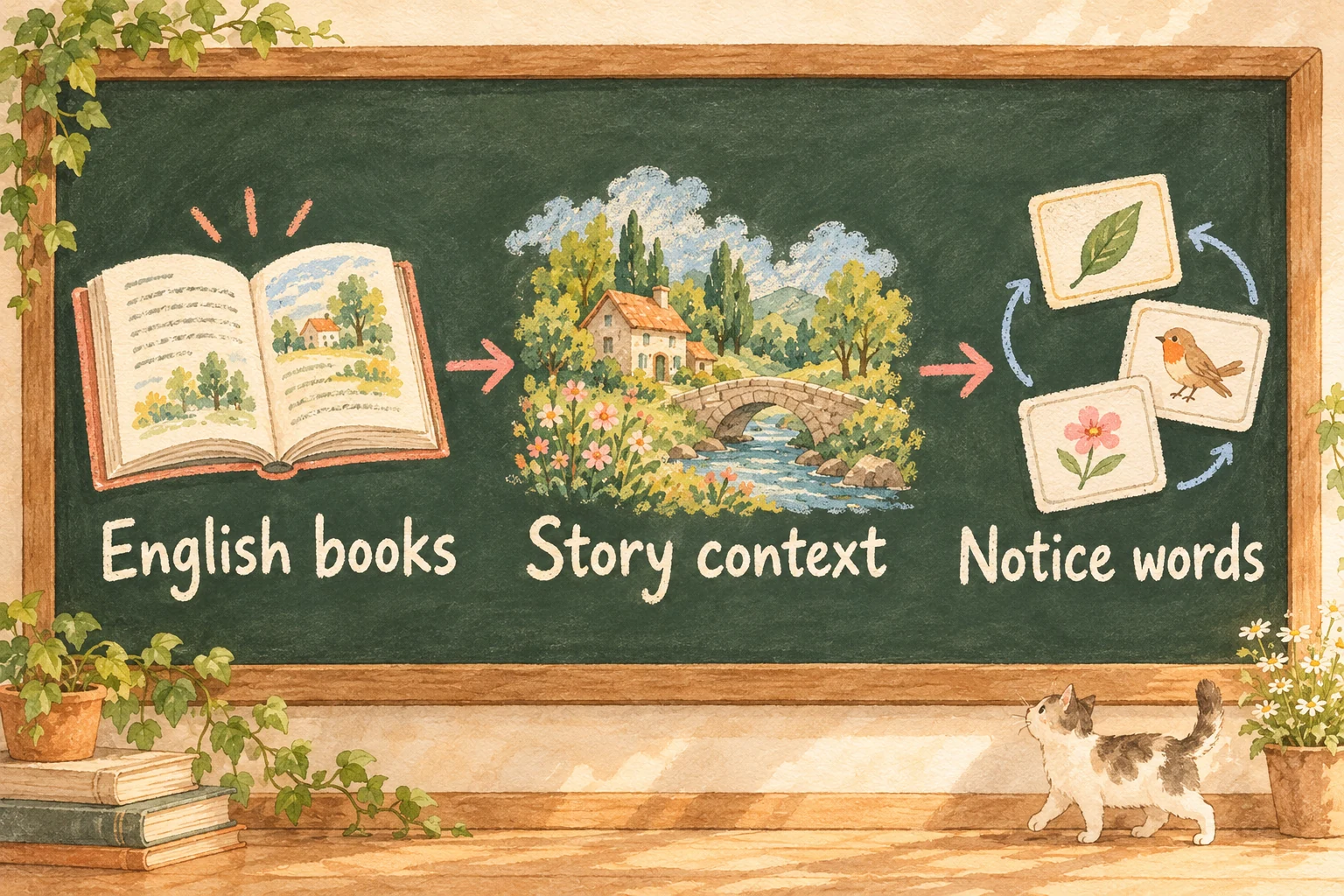
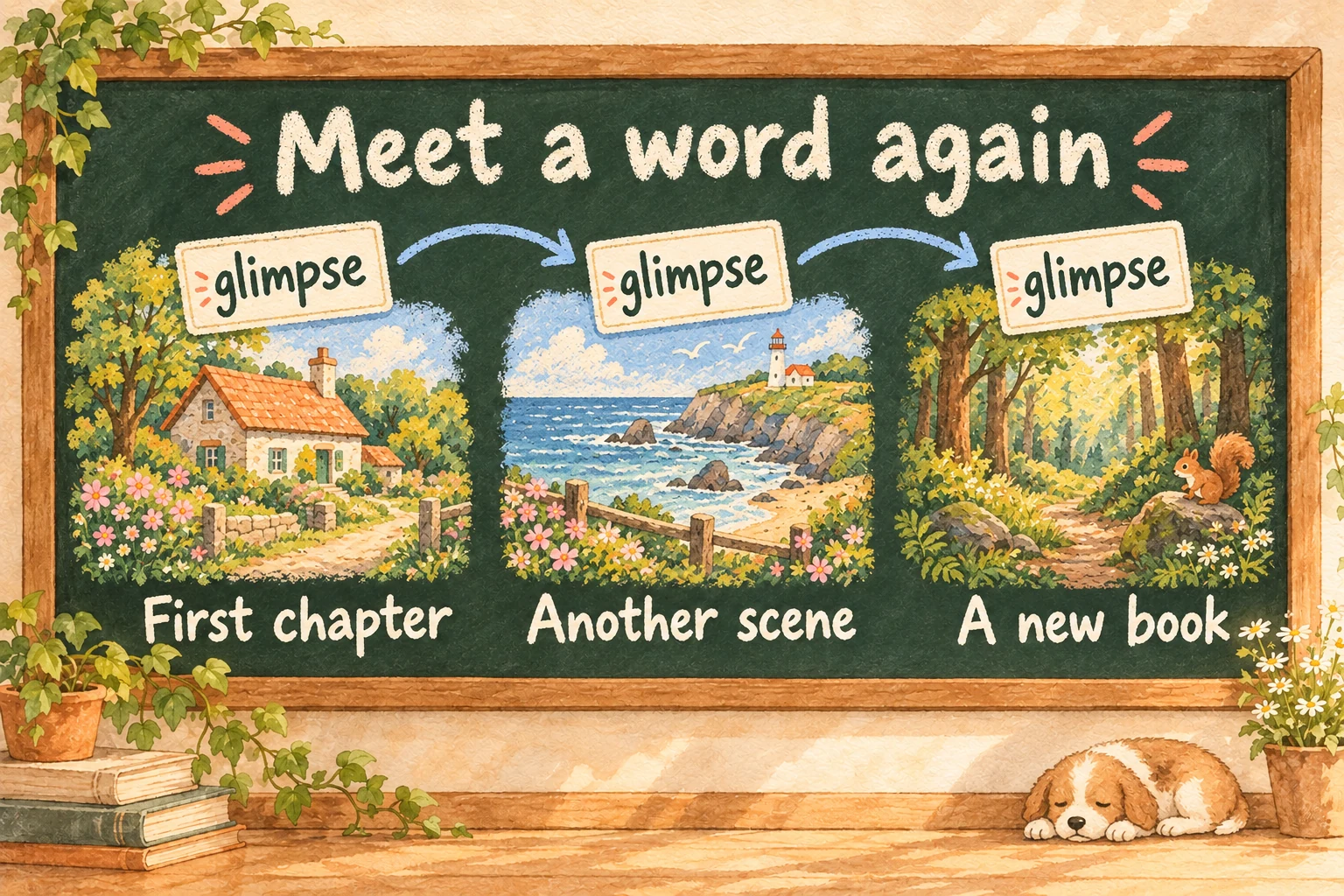
Treat repeated words as invitations to notice. Perhaps a verb appears in dialogue, then in a description. Ask what it is doing in each scene. You can compare the uses without writing a full vocabulary entry. Context gives you something concrete to return to when a short dictionary meaning feels too broad.
Look up a word when it blocks an important action or keeps returning. If a minor detail can wait, keep reading. Save a few useful items with their book, then return to the paragraph and see whether the meaning now fits. A growing list is helpful only if you can still follow the story that produced it.
Make tomorrow’s return easy
Our practical recommendation is a ten-minute routine, not a research-established dose. Read for most of that time, check only what you need, and finish by recalling one event in your own words. Leave a bookmark at a place you can find quickly. Tomorrow, read a little of the previous paragraph before moving on.
If ten minutes feels heavy, change the book or shorten the session. If you want another chapter, continue. Judge the choice by whether you can follow it and want to return, rather than by how impressive the cover looks. A manageable story leaves space for both understanding and curiosity.
References
Keep your attention on your English book
Find a meaning with a few taps. Your words collect automatically in a wordbook for the book you are reading.